

With the increased competition in guest posting, High-quality backlinks continue to be among the most powerful off-page ranking signals (even in 2026), and will continue to be valuable, but there are many low-quality guest posting sites, inflated metrics which are helpful, may have been helpful but do not provide your business with valuable links once you inspect each one more closely.
WhitePress and Google both make the same point in different ways: quality, relevance, and editorial standards matter far more than mass link buying.
This ranking focuses on platforms that actually help you buy placements with less guesswork. Some are best for agencies, some for buyers who have a low budget, and some for PR-style placements. The order below reflects overall usefulness, not hype.
What Are Guest Posting Marketplaces?
A guest posting marketplace is a service that bridges advertisers with publishers who are willing to accept submissions in the form of sponsored articles, guest posts, or similar placements. Instead of spamming out hundreds of outreach emails, you look through available sites, compare metrics, filter by niche or region and purchase an appropriate placement that suits your campaign. Collaborator, WhitePress, PRNEWS.IO, Linkhouse, and the others on this list all work around that basic model.
The marketplace model is different from pure outreach because the inventory is already listed, the filters are visible, and pricing is easier to compare. It also differs from free guest posting, where you usually trade time for cost and pitch sites manually. Free outreach can work, but marketplaces usually make buying faster and easier to scale when you want more predictable results.
Top Guest Posting Marketplaces in 2026
1. Collaborator
Collaborator ranks first because it feels built for serious buyers rather than casual bargain hunters. The platform offers guest posts and Telegram placements, shows 40+ technical parameters, and integrates Ahrefs metrics directly into the catalog. It also claims a large international footprint, with campaigns and inventory spread across many countries and languages.
Key features
- Ahrefs metrics integrated into listings
- 40+ filters for better selection
- Guest posts and Telegram placements
- Fast deal completion on many orders
Pros
- Strong filtering and comparison tools
- Detailed metrics help with smarter buying
- Fast turnaround on many placements
- Good for agencies and serious SEOs
Cons
- Can feel crowded for beginners
- Requires some SEO knowledge to use well
- Not the simplest platform for casual buyers
- Too much data can slow down quick decisions
Best for:
Agencies, digital PR teams, and experienced SEOs who want deep filtering and fast execution.
2. WhitePress
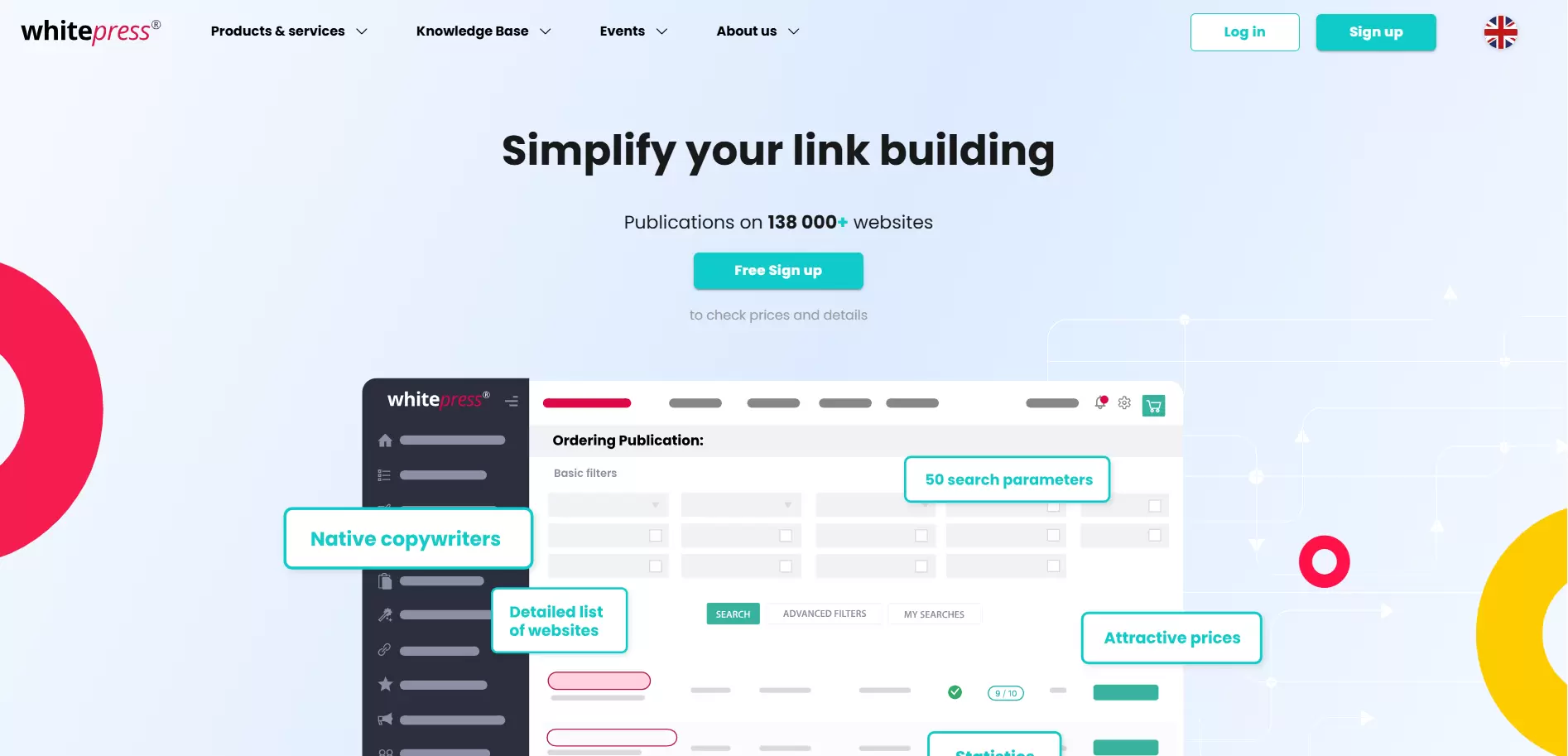
WhitePress is one of the most polished platforms in the space. It describes itself as an automated content marketing platform that lets you publish articles in thousands of portals worldwide, and it backs that up with original quality scoring that is manually checked by the WhitePress team.
Key features
WhitePress combines guest posting, native copywriting, and marketplace access in one system. That makes it strong for international campaigns where the content and placement side both matter.
- Good for content plus placement in one place
- More structured than many marketplaces
- Manual quality checks add trust
Cons
- Can feel more complex than simple buy-and-go tools
- Better suited to teams than first-time buyers
- Not always the fastest option
Best for
International SEO teams and marketers who want editorial control plus scale.
3. PRNEWS.IO
Overview
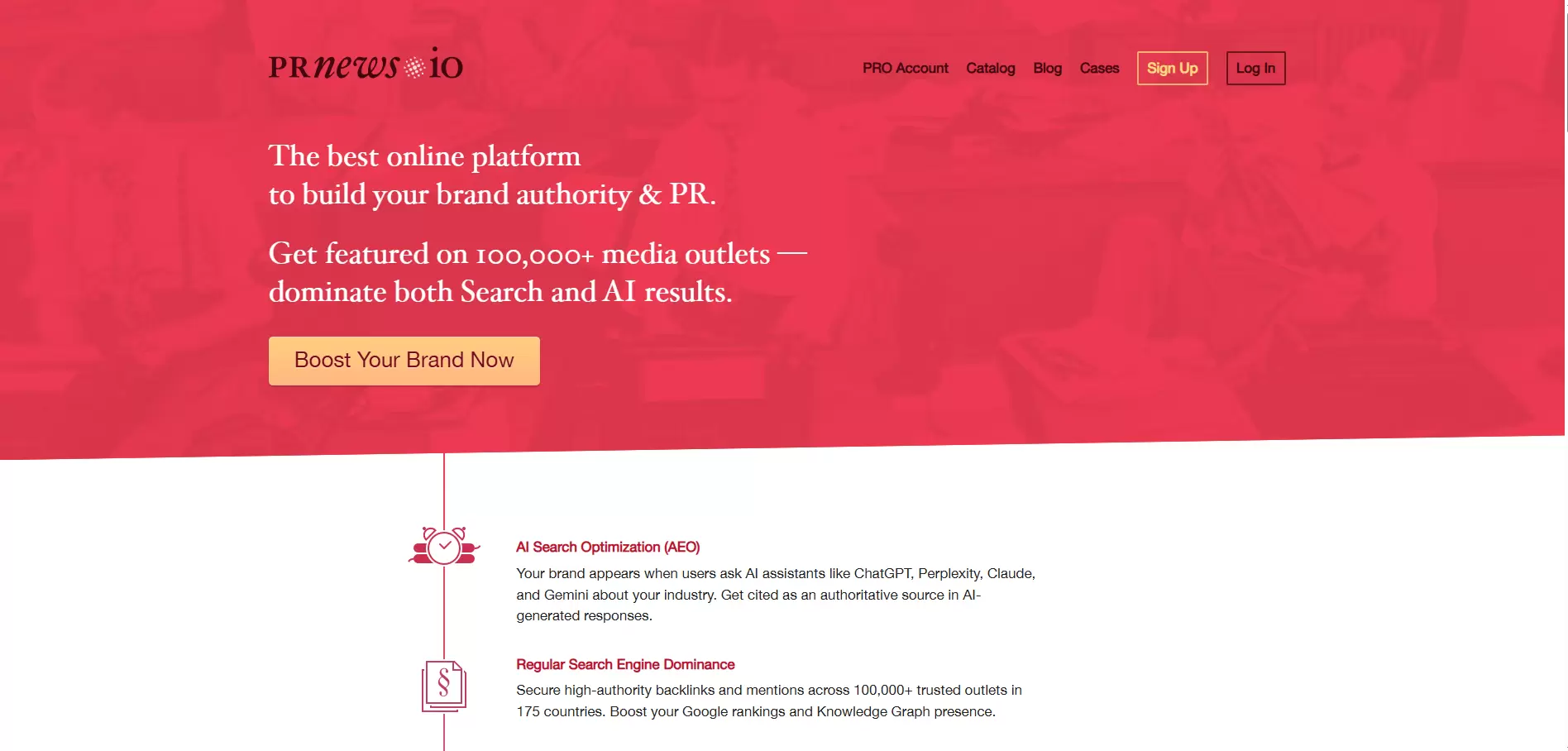
PRNEWS.IO is strongest when the goal is sponsored media placement rather than narrow link chasing. The platform claims brands can purchase placements on 100,000 trusted news sites and do so quickly – sidestepping trapping outreach bottlenecks. It also features a 100% money-back guarantee, which lower the risk for first-time purchasers.
Key features
It has a broad media catalog, one-click publishing flow, and pricing that starts from €6 on its backlinks page. That makes it one of the easiest platforms to understand quickly.
- Very easy to understand
- Simple buying flow
- Large media catalog
- Good for sponsored content and PR-style placements
Cons
- Less advanced for deep SEO control
- Better for media buying than technical link building
- Pricing can vary by outlet
- Not always the best fit for power users
Best for
Brands that want sponsored media visibility, PR-style coverage, and quick buying.
4. Linkhouse
Overview
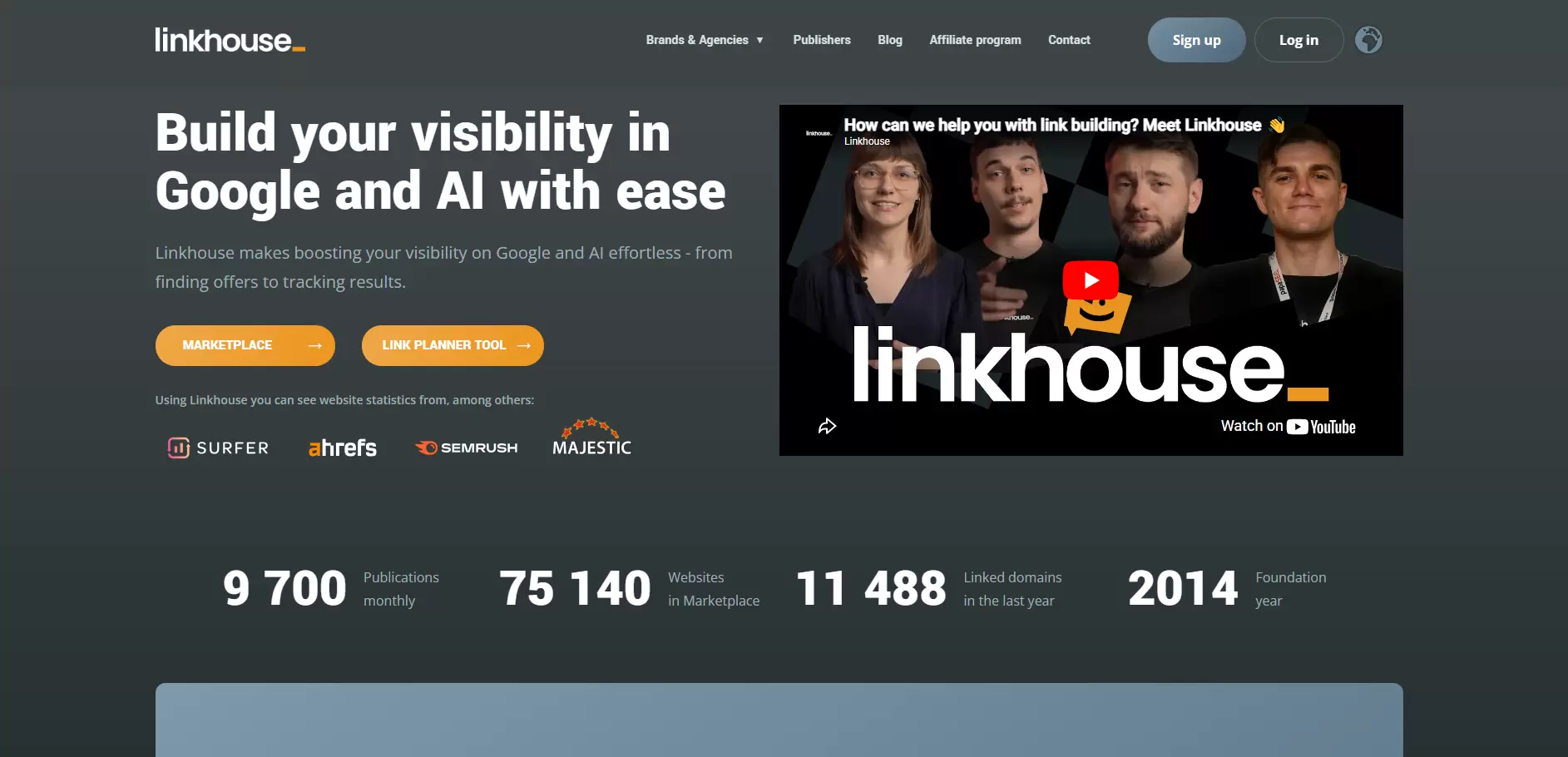
Linkhouse is more than a marketplace. It combines link building, content marketing, planning tools, and a large database of websites. The platform says it simplifies link building from finding offers to monitoring orders, and it positions itself as a full process-management system.
Key features
- Guest post marketplace
- Link planner and campaign tools
- Backlink gap analysis tools
- Content marketing and order tracking
Pros
- Combines buying and campaign planning
- Useful tools for link strategy and management
- Good for repeat campaigns
- Strong for structured SEO workflows
Cons
- More complex than basic marketplaces
- Can feel heavy for small one-off buys
- Not the lightest user experience
- Better for teams than casual users
Best for
SEO teams that want buying, planning, and reporting in one place.
5. Bazoom
Overview
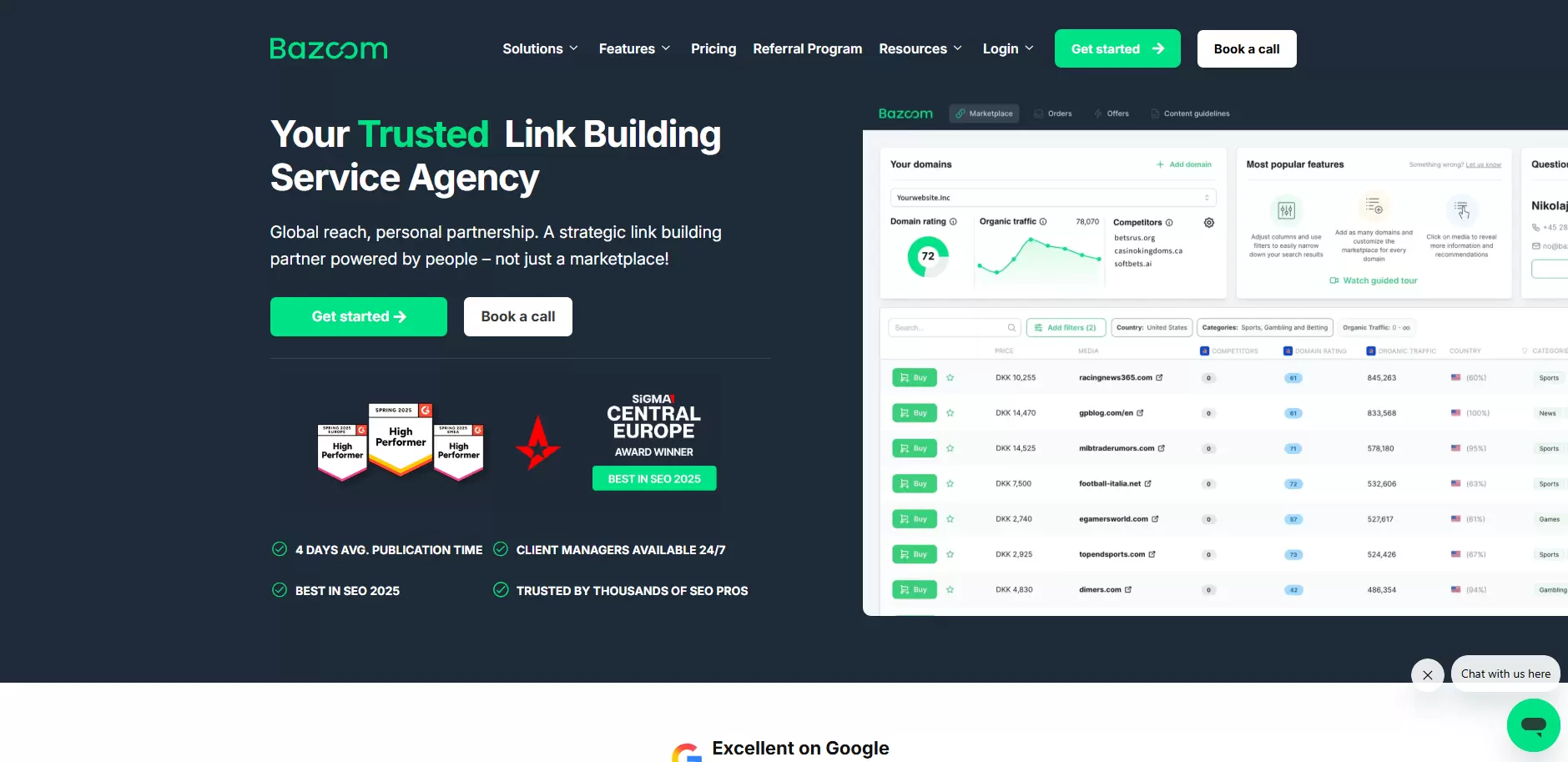
Bazoom is one of the cleanest pay-as-you-go options in the market. It says there are no subscription or entry fees, all prices include content and publication, and buyers only pay for the links they purchase. It also claims access to more than 80,000 media outlets.
Key features
- Pay-as-you-go pricing model
- Strategy builder
- Large media network
- 24/7 support
Cons
- Less advanced control than some power-user platforms
- Smaller feel compared to the biggest marketplaces
- Not the cheapest for every placement
- May feel too simple for advanced buyers
Best for
Teams that want transparency and support without a subscription trap.
6. Serpzilla
Overview
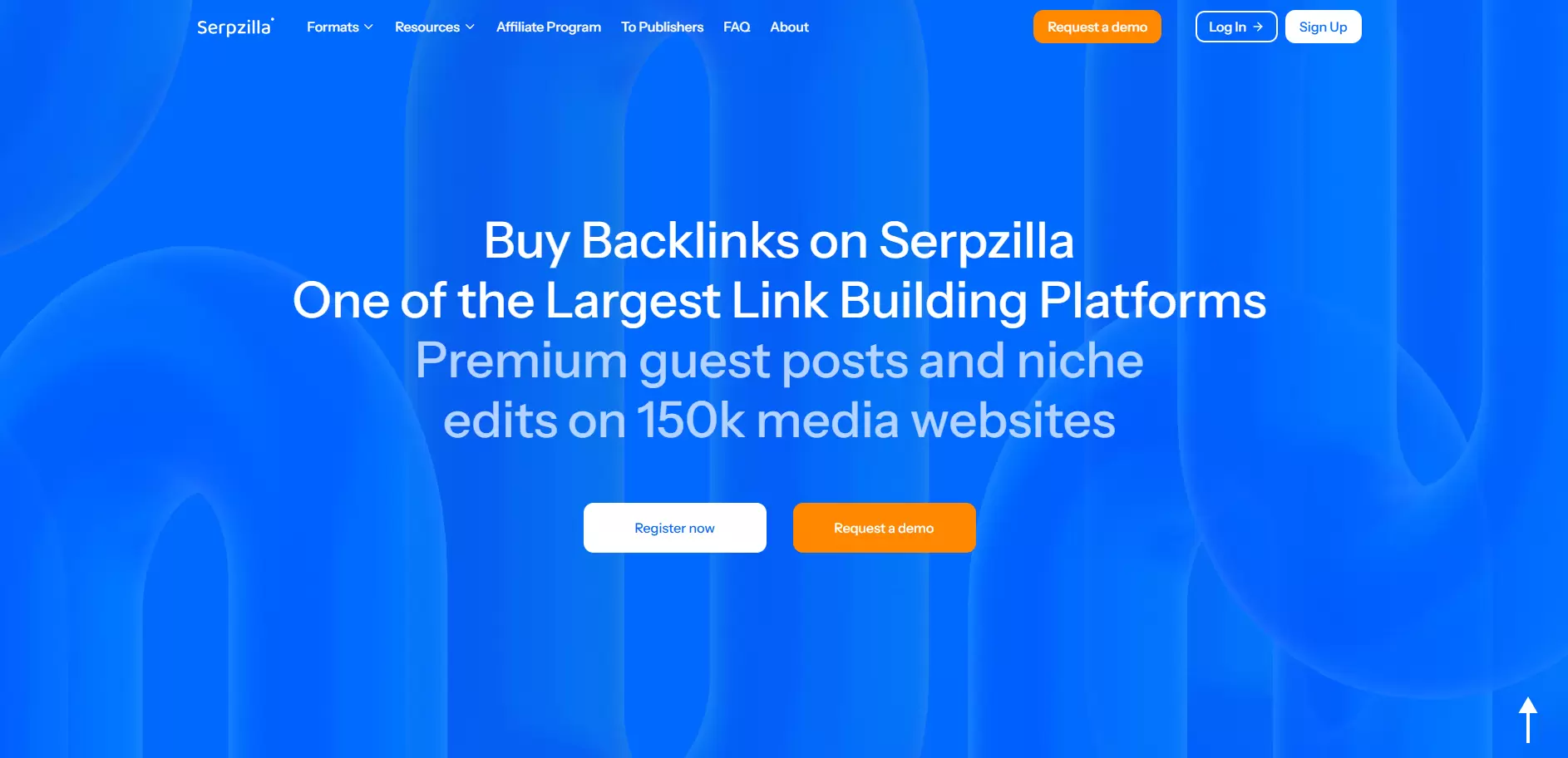
Serpzilla is built for volume and flexibility. Its marketplace shows large numbers of available guest posts, and its pricing page indicates guest post inventory spread across different budget tiers. It also supports pay-per-placement, which is useful when you want control instead of a bundled service.
Key features
- Large guest post inventory
- Pay-per-placement model
- Flexible price tiers
- SEO-focused marketplace filters
Pros
- Large inventory
- Flexible buying options
- Good for high-volume campaigns
- Strong for experienced SEO users
Cons
- Can feel less guided
- More suited to experts than beginners
- Quality checking still matters a lot
- Easy to buy badly if you rush
Best for
Experienced SEOs and agencies that want scale, flexibility, and a deep catalog.
7. Adsy
Overview
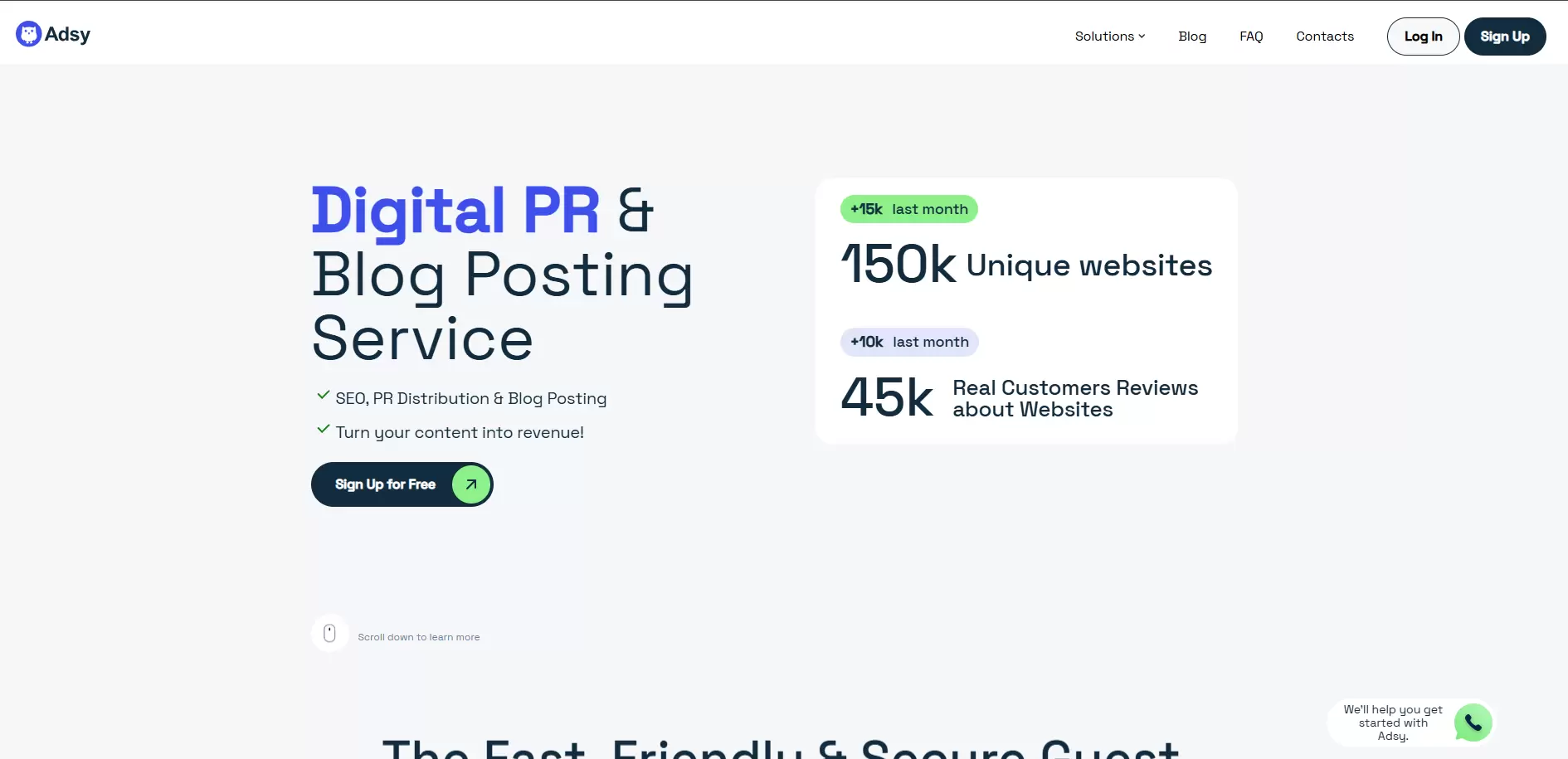
Adsy ranks in the middle because it has scale and useful metrics, but the buying experience is not as smooth as the top platforms. Their homepage says they have 150,000 unique websites and 45,000 real customer reviews, and they build in metrics like Moz DA, Ahrefs DR, and GA traffic right into the process.
Key features
- Large publisher network
- Metric filters like DA, DR, and traffic
- Placement and content management
- Post-publication link tracking
Pros
- Large marketplace
- Useful SEO metrics shown upfront
- Good for scaling campaigns
- Flexible enough for different budgets
Cons
- Less polished than the top platforms
- Filtering can take time
- Pricing varies a lot by listing
- Requires careful site review
Best for
Buyers who want scale and metrics without needing a highly curated concierge experience.
8. PressWhizz
Overview
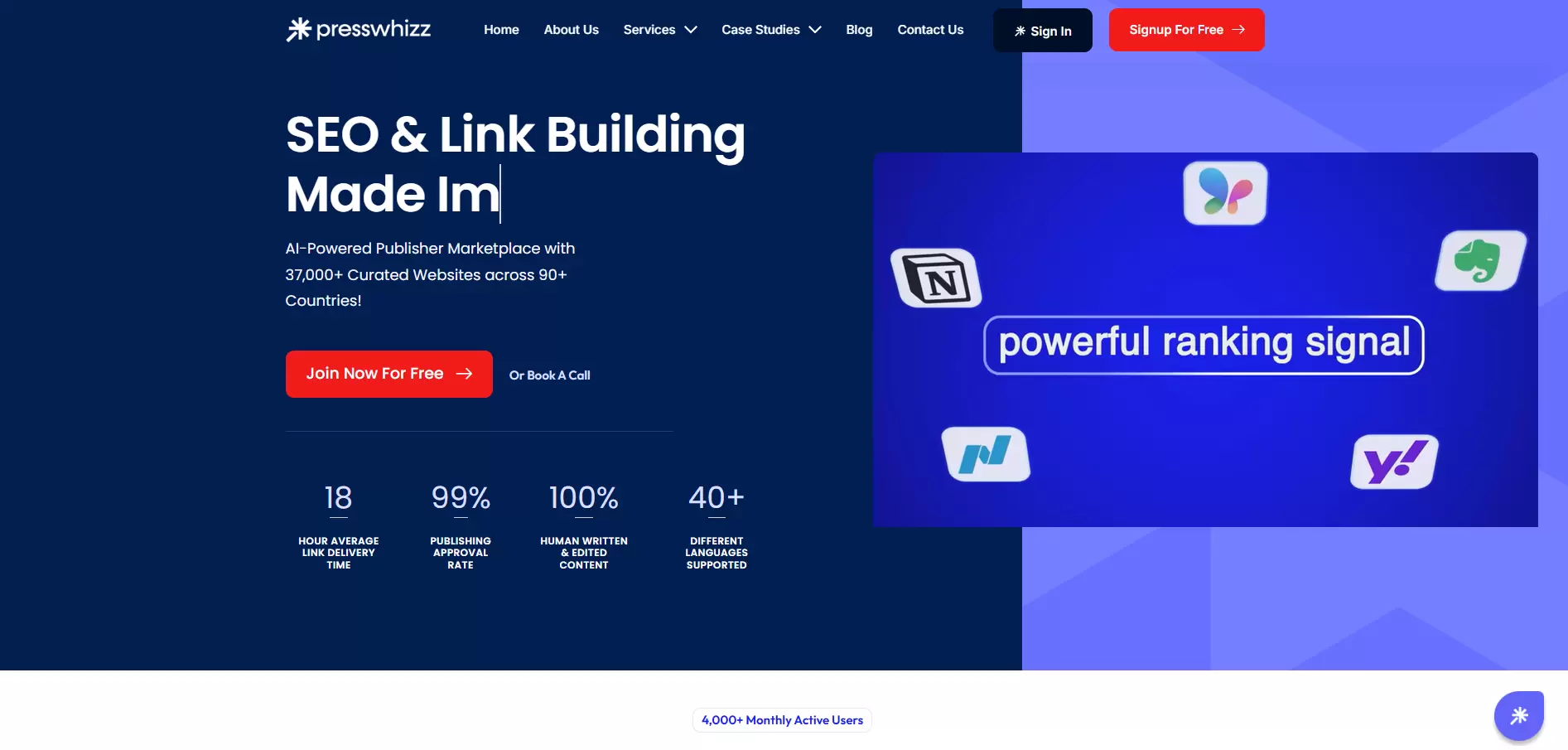
PressWhizz is a newer-style marketplace, fast and transparent. You can browse available sites, check SEO metrics and select placements before you buy, it says, and most guest posts go live within 18 hours – with some premium placements taking as long as seven days.
Key features
- Transparent site metrics
- Fast guest post publishing
- Guest post service with content included
- Easy site browsing and comparison
Pros
- Fast publishing speed
- Transparent placement flow
- Easy to browse and compare sites
- Good for buyers who want less friction
Cons
- Smaller catalog than some bigger platforms
- Less suitable for buyers who need huge scale
- Not as deep as more advanced marketplaces
- Better for speed than maximum choice
Best for
Buyers who care about speed and want to see the site before they spend.
9. iCopify
Overview
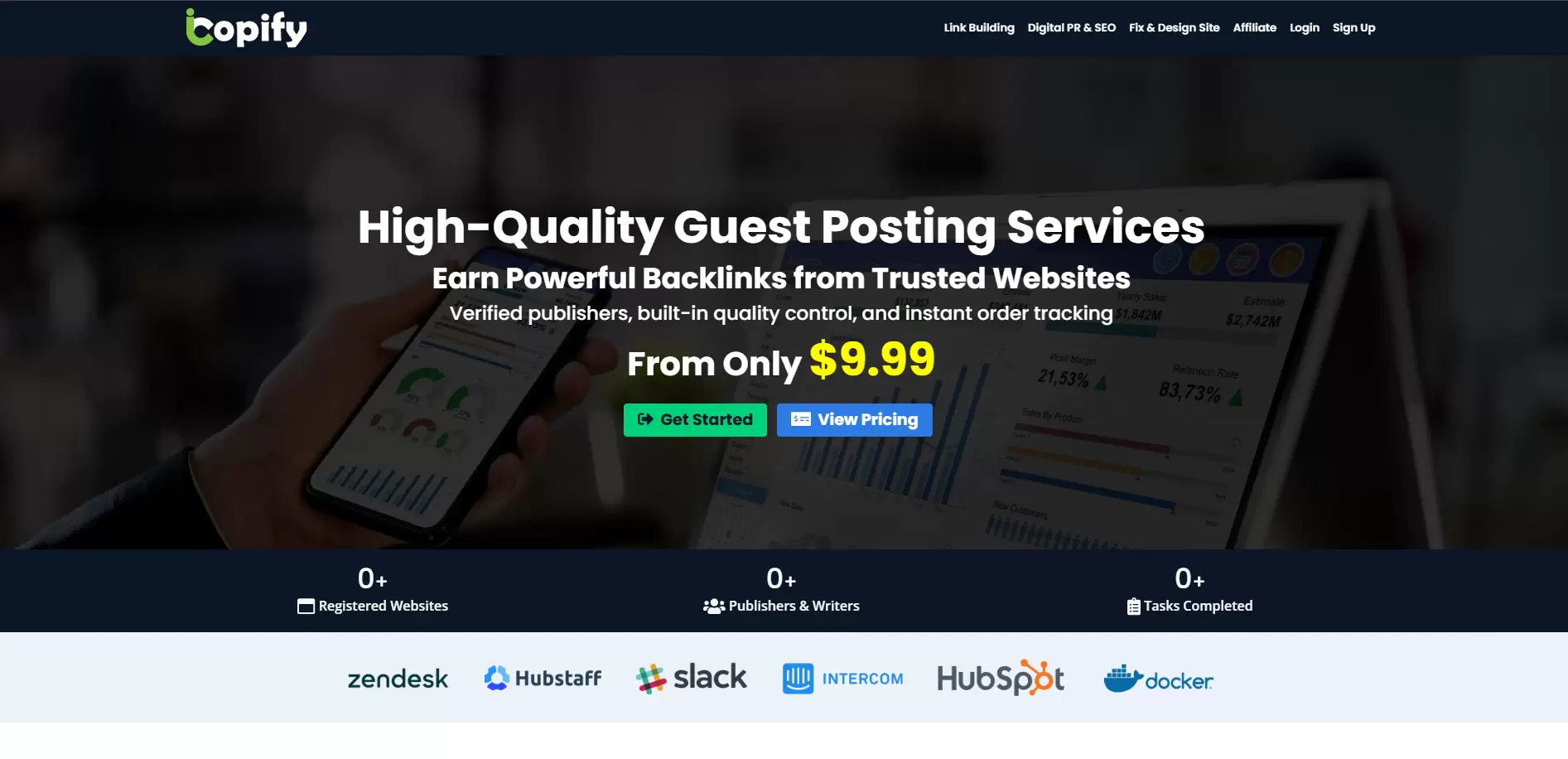
iCopify is a strong budget-friendly option with broad reach. It says it gives access to 55,000+ real guest posting sites, supports manual placements, and starts from $4.99 or $9.99 depending on the page you use. It also claims most links go live within 7 to 10 business days.
Key features
- 55,000+ guest posting sites
- Low-cost entry pricing
- Manual moderation
- Real traffic and metric filters
Pros
- Low starting prices
- Big site inventory
- Easy to use for budget campaigns
- Good for startups and affiliate buyers
Cons
- Lower prices mean more caution is needed
- Quality can vary more
- Not as premium as top-tier platforms
- Needs better site checking before purchase
Best for
Startups, affiliates, and budget buyers who still want real sites and live tracking.
10. Link Publishers
Overview
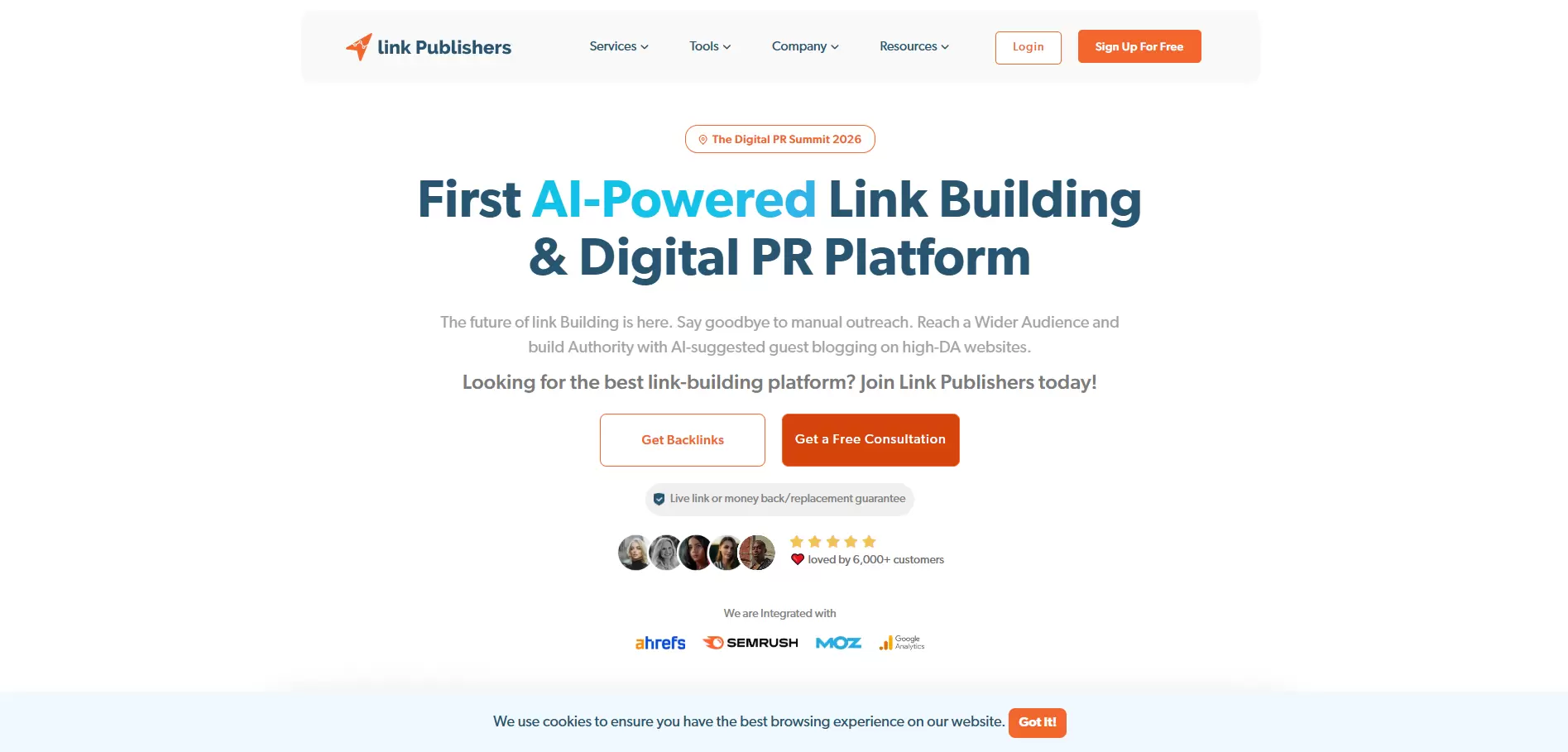
Link Publishers is more package-driven than the marketplaces above it. The platform says it is AI-powered, trusted by 6,000+ businesses, and integrated with Ahrefs, Semrush, Moz, and Google data. It offers guest post bundles rather than a pure open catalog.
Key features
- AI-powered link building workflow
- Guest post service packages
- SEO metric integrations
- Content, links, and delivery bundled together
Pros
- Simple package-based buying
- Easy to budget
- Managed bundle approach saves time
- Good for teams that want less manual work
Cons
- Less flexible than open marketplaces
- You buy a package, not full control
- Not ideal for advanced custom campaigns
Best for
Teams that want a packaged, managed buying experience with predictable delivery.
Comparison Table
| Platform | DA Range | Turnaround | Best For |
| Collaborator | Varies by listing | Often within 48h | Agencies, PR teams |
| WhitePress | Varies by listing | Varies | International campaigns |
| PRNEWS.IO | Varies by media outlet | Fast, one-click | Sponsored media |
| Linkhouse | Varies by listing | 5-10 business days | SEO teams |
| Bazoom | Varies by listing | Varies | Transparent buyers |
| Serpzilla | Varies by listing | Varies | Power users |
| Adsy | Varies by listing | Varies | Scalable campaigns |
| PressWhizz | Varies by listing | 18h to 7 days | Fast placement |
| iCopify | Varies by listing | 7-10 business days | Budget buyers |
| Link Publishers | DA 10-20 on lite, higher on larger packages | 7-14 days | Managed bundles |
Best Guest Posting Platforms by Use Case
Best for Beginners
PRNEWS.IO and PressWhizz are easiest to understand because the buying flow is simple, the catalog is visible, and the platform does not force beginners to guess too much. WhitePress is also beginner-friendly if the buyer wants extra structure and native copywriting support.
Best for Agencies
Collaborator and Linkhouse are the strongest agency picks because they combine filtering, speed, and campaign management. Bazoom also fits agencies well because its pay-as-you-go model keeps budgets controlled while still giving access to a large media network.
Best for Budget Buyers
iCopify and Serpzilla are the best options when budget matters most. iCopify starts low and still shows real sites and metrics, while Serpzilla gives buyers a wide range of inventory and price tiers. Adsy also belongs here if the buyer is willing to spend time filtering.
Best for High Authority Links
Collaborator, WhitePress, and PRNEWS.IO are the stronger options when you care more about authority and brand-safe placements than just cheap volume. They lean more toward transparent inventory and editorial quality than the bargain side of the market.
Free vs Paid Guest Posting Marketplaces
Free guest posting usually means manual outreach. It costs less money, but it takes more time and effort to plan. Paid marketplaces require money up front, but they save you time, let you see your inventory, and make the process easier to grow.
Choose free outreach when you have time, and paid outreach when you need to get things done quickly and have more control over the process.
In 2026, paid is worth it when it helps you avoid spammy sites and weak link farms.
Tips to Choose the Right Guest Posting Marketplace
Check real traffic, not just DA. Collaborator explicitly lists monthly traffic as a key selection criterion, which is the right mindset because authority without audience is just decoration.
Stay away from spammy sites and PBNs. WhitePress even says not to use link farms or PBNs, and Google’s spam policy rules make it pretty clear that shady tactics can get you penalized or worse.
Also check link type carefully. You should also know if a link is sponsored, dofollow, or nofollow. Google’s rules for links still say that they should make sense to both users and search engines.
If you want to make smarter placement decisions long term, you need more than marketplace metrics.
Stay updated with trusted SEO insights so you can identify low-quality link opportunities, recognize evolving spam patterns, and focus on strategies that can help you spot weak link opportunities, changing spam signals, and safer long-term SEO practices.
Common Mistakes to Avoid
The fastest way to waste money is buying cheap bulk links just because the price looks attractive. Low-quality link buying is exactly the kind of behavior Google keeps targeting through spam and link policies.
Another mistake is ignoring anchor text strategy and indexing. A placement that never gets indexed or uses awkward over-optimized anchors is not doing you many favors.
Are Guest Posting Marketplaces Still Worth It in 2026?
Yes, but only if you use them correctly. Guest post markets are still useful since they make it easier to find suitable publications, save time, and create links without relying on random outreach. The platforms that will keep working in 2026 are the ones focused on transparency, manual review, quality checks, and real editorial standards.
The future trend is not more spam. It is more scrutiny. AI content is cheaper to produce, but Google has also warned that generative AI content that creates pages without adding value can violate scaled content abuse policies. That means the winning marketplaces will be the ones that protect quality instead of pushing quantity alone.
Guest posting still works, but it should not be your only traffic strategy. For better stability, combine link building with other channels so your blog can keep growing without relying entirely on Google Search.
Conclusion
Guest posting marketplaces are still useful in 2026, but only the better ones deserve your money. Collaborator, WhitePress, PRNEWS.IO, Linkhouse, and Bazoom lead because they balance transparency, inventory quality, and usability.
Serpzilla, Adsy, PressWhizz, iCopify, and Link Publishers each have a role too, especially when budget, speed, or package simplicity matters more than a perfect all-rounder.
Pick the platform that matches your goals, not the one with the loudest promise. If you care about authority, choose quality. If you care about scale, choose inventory. If you care about speed, choose transparency. Start building high-quality backlinks today with the platforms above.