
In the SaaS world, products rarely sell themselves.
People don’t just buy features – they buy clarity. They buy simplicity. They buy a story that helps them understand why this tool matters to
them right now.
That’s where visual storytelling becomes a superpower.
Not because it’s trendy, but because it makes complex products feel effortless.
But here’s the irony: most SaaS Explainer videos miss that mark completely. They end up looking outdated, overloaded, or so confusing that viewers forget what the product even does. The real issue isn’t the animation or the style – it’s the lack of structure.
When SaaS teams don’t fully understand their audience, emotion, or the story they want to tell, the video collapses.
But once you get clarity on the fundamentals, everything else becomes simple.
Why SaaS Visual Stories Go Wrong
A lot of marketing teams jump straight into design before deciding who they’re talking to or what emotion they want to evoke. Enterprise buyers, for example, don’t want dramatic storytelling. They want speed – a clear explanation of the pain point and a simple view of how the product solves it.
A general audience, on the other hand, doesn’t connect with purely functional content. They need a narrative. They need a character they can relate to, a scenario that mirrors their everyday challenges, and a journey that ends with your product as the hero.
The visual style should change entirely based on the viewer. That single insight alone eliminates half the problems SaaS videos face.
Building a Story That Fits Your Buyer
Every strong piece of visual content whether it’s a 60-second animation or a 10-second teaser starts with three questions:
1. What feeling should the viewer leave with?
Confidence? Relief? Excitement? Professional trust?
2. What’s the core problem they’re dealing with?
If the problem isn’t clear, the story collapses.
3. How simple can you make the explanation?
Because complexity kills retention.
For high-level decision-makers, the story is usually direct. No fluff, no metaphors. Just the problem, the friction it creates, and the product’s value delivered fast.
For consumer-facing SaaS, you can open up the creative palette. Characters, scenarios, emotional arcs, humor, and relatable visuals work beautifully because the audience has the mental space for it.
Choosing the Right Style for Your SaaS Story
Different storytelling styles can completely reshape how your product is perceived.
Product-led storytelling – where the visuals revolve around real UI, micro-interactions, and feature-level clarity. Blogs often use short GIFs, scrolling demos, or subtle animations to help readers understand the product instantly. It’s not dramatic – but it’s incredibly effective.
Product Demo Video | SaaS Explainer Video | Infinity
Character-led storytelling – Here, the viewer sees their own struggles reflected through a relatable character. Watching someone face the same friction – and overcome it using your product – creates emotional buy-in that no feature list can match.
Coca Cola – Brotherly Love | Coke / Avicii Hey Brother
Abstract style – a favorite for premium or minimal-product brands. Apple excels at this. Their ads don’t tell a long story; they build a feeling. A mood. A world. SaaS companies use similar techniques when their goal is to create a strong perception of innovation, rather than explain the mechanics.
Corporate Explainer Video for HarnsTech | B2B Marketing Videos
Mixed Media – A blend of live action, 2D, 3D, UI and everything in between – can make a SaaS video feel modern and high-end when done correctly.
KEAN “FRUITS”
The point is simple: your story should feel like it belongs to your audience.
Why Many SaaS Teams Get Visual Identity Wrong
A surprising number of SaaS products lose trust because their visual identity keeps changing. A playful, colorful Instagram post. A hyper-corporate website. A futuristic YouTube ad. A cartoonish blog graphic.
When nothing feels consistent, audiences sense confusion and confusion erodes credibility faster than anything.
Visual storytelling isn’t only about the video itself.
It’s about the world you build across:
- landing pages
- social feeds
- product demos
- onboarding
- ads
- blogs
The more consistent the world, the stronger the brand recall.
The Simplicity Principle That Always Wins
One of the biggest misconceptions in SaaS storytelling is believing that more complexity equals more impact. In reality, the opposite is true.
Most successful SaaS videos follow a structure so simple that it almost feels too basic:
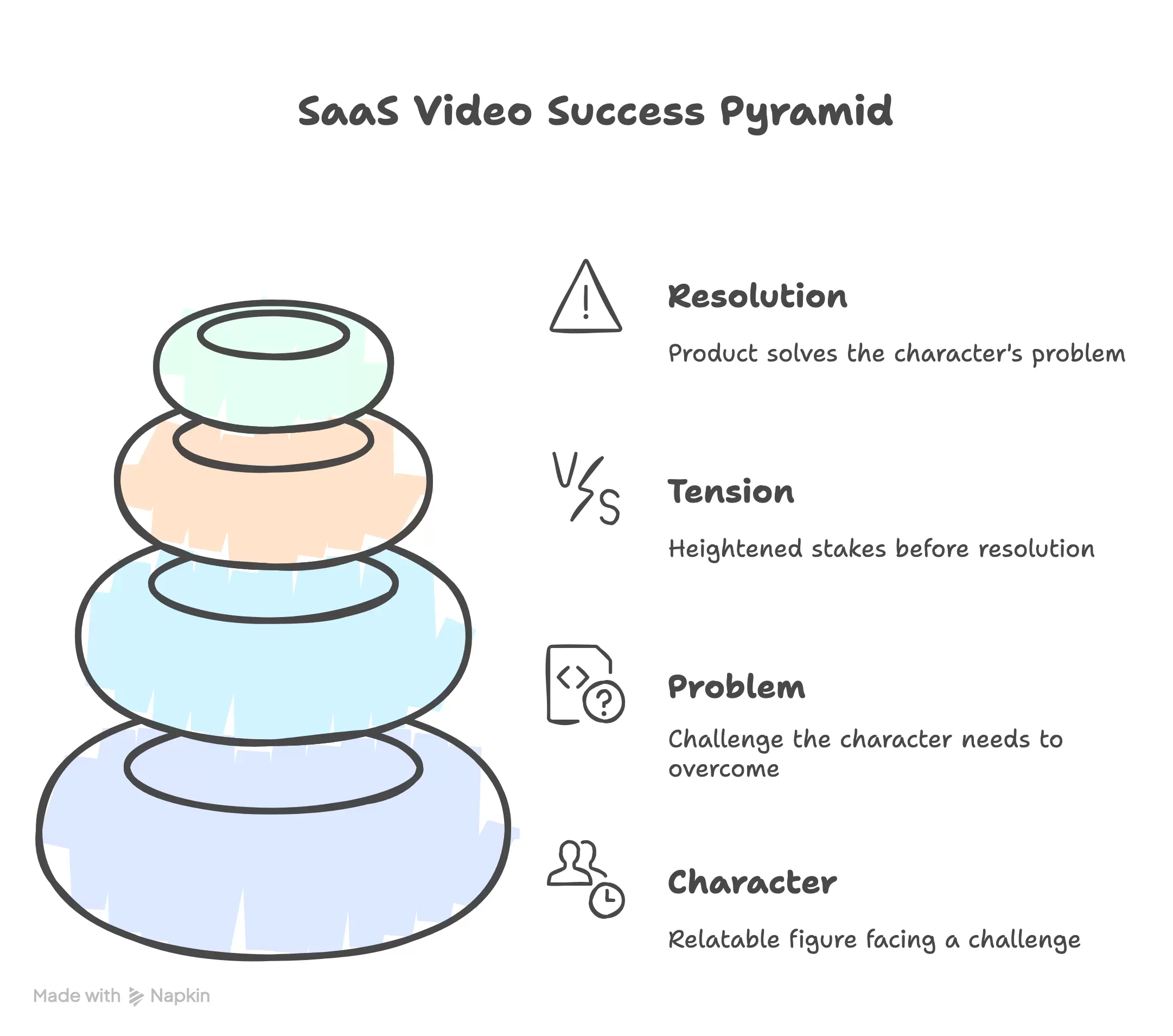
That’s it.
No need for a 3-minute narrative unless you’re telling a deep story. Most of the time, short teasers work far better – they create curiosity without consuming the viewer’s time.
And if your product is complex, split the message into a sequence of shorter videos instead of forcing everything into one explanation.
People respect clarity. And clarity sells.
Final Thoughts
Great visual storytelling in SaaS is not about flashy animation or abstract creativity. It’s about intention. A well-defined mood, a relatable conflict, and just enough detail to help viewers understand how your product fits into their world.
When you simplify the message, respect the audience’s time, and build a consistent visual identity, storytelling becomes effortless and your SaaS becomes memorable.